

Bringing Brand Strategy to Life
Designing a modular identity system rooted in strategic clarity
I. Background & Challenge
This Entry covers two branding projects. Both represent different points in my professional evolution, but they share a common challenge: bringing brand strategy from concept to institutional practice.
At Como Friends, I worked alongside the team at Known Branding, contributing to implementation while observing a disciplined approach to strategic development. What distinguished their process was not only that strategy guided the design, but that it was fully articulated and documented as part of the final deliverable. The first half of their brand book was dedicated entirely to strategic clarity.
Seeing strategy elevated and documented in that way reshaped my own understanding of what a complete brand system should include.
Later at Western Academy of Beijing, I led the strategy process myself, facilitating workshops, defining positioning, and guiding collaboration with MEAT Beijing to complete the visual system. Developing the strategy required alignment across diverse stakeholders and competing priorities.
In both cases, the real challenge was operational. How do you move from a strategic framework to daily practice across publications, websites, events, and internal culture? How do you ensure that the strategy is understood, applied consistently, and sustained over time?
Implementation does not begin after the strategy is written. It begins during its formation.
Buy-in, education, and clarity must be built into the process from the start. Without that foundation, even the strongest strategy risks becoming a document rather than a living system.
II. Strategy & Expression:
The Three Pillars of Implementation
Across both institutions, I found that successful brand implementation depends less on creative output and more on structured leadership. Strategy does not come to life automatically. It must be carried, reinforced, and applied consistently across people and systems.
Through these experiences, three consistent pillars emerged. They are not sequential steps, but interdependent forces that sustain brand alignment over time.
- Build alignment before you build assets.
- Educate relentlessly.
- Phase change with transparency.
These pillars provide the operational structure that supports implementation across publications, websites, events, and internal culture. Together, they determine whether strategy becomes lived practice or archived documentation.
Pillar One:
Build Buy-In Before Building Assets
Brand implementation succeeds or fails long before the first redesigned publication or website goes live. Buy-in must be established during strategy development, not introduced afterward. When stakeholders understand the rationale behind key decisions, resistance decreases and execution accelerates.
At Como Friends, observing Known’s disciplined approach to buy-in was formative. The reasoning behind major design and editorial shifts was clearly documented and shared early. When implementation began, the politics were manageable because the “why” had already been established.
I carried that lesson into my work at Western Academy of Beijing. Buy-in and brand education began in structured workshops involving faculty, administrators, students, parents, and leadership. Listening was deliberate, but disciplined. Input was gathered, synthesized, and anchored in shared themes rather than individual preference. Data and qualitative insights were presented transparently, giving the community a clear view of the strategic direction before visual decisions were finalized.
Early buy-in reduced friction during rollout and positioned the brand as a shared framework rather than a marketing initiative.
Pillar Two:
Educate Relentlessly
A rebrand does not succeed because new assets are distributed. It succeeds when people understand how and why to use them. Education is not a launch event. It is an ongoing responsibility, and it must extend beyond the marketing team.
At Como Friends, brand stewardship became part of my role after the rebrand. Training sessions introduced the new identity to staff across departments, not only those responsible for communications. New hires were onboarded into the system, and teams were guided on how to apply the brand consistently in their daily work. The goal was not enforcement. It was shared ownership.
At Western Academy of Beijing, education was embedded into implementation. One example was the student-designed 35th anniversary logo. Rather than rejecting student creativity or allowing it to drift off-brand, I worked alongside the teacher to guide the project within the new visual system. The result preserved student ownership while maintaining brand coherence.
Brand systems endure when understanding is distributed across the organization. Without education, even the strongest strategy gradually erodes.
Pillar Three:
Phase Change with Transparency
Rebranding an institution is not a single event. It is a staged process that must balance momentum with practicality. Some assets can change quickly. Others require budget cycles, production timelines, and technical development.
At Como Friends, the rollout was intentionally phased. Publications, event materials, newsletters, and the website were updated in structured waves rather than all at once. Staff understood what would change immediately, what would follow, and why certain elements required more time. This transparency reduced anxiety and helped departments plan accordingly.
At Western Academy of Beijing, large-scale updates such as the website required coordination with external partners and extended development timelines. Rather than rushing implementation, updates were sequenced to maintain coherence while respecting operational realities. Clear communication around phasing helped manage expectations across the community.
Phased implementation is not about slowing change. It is about protecting credibility. When timelines are transparent and priorities are clear, institutions experience rebrand as progress rather than disruption. Click below for examples from both projects.
Western Academy of Beijing Brand Guide
Western Academy of Beijing Brand Guide
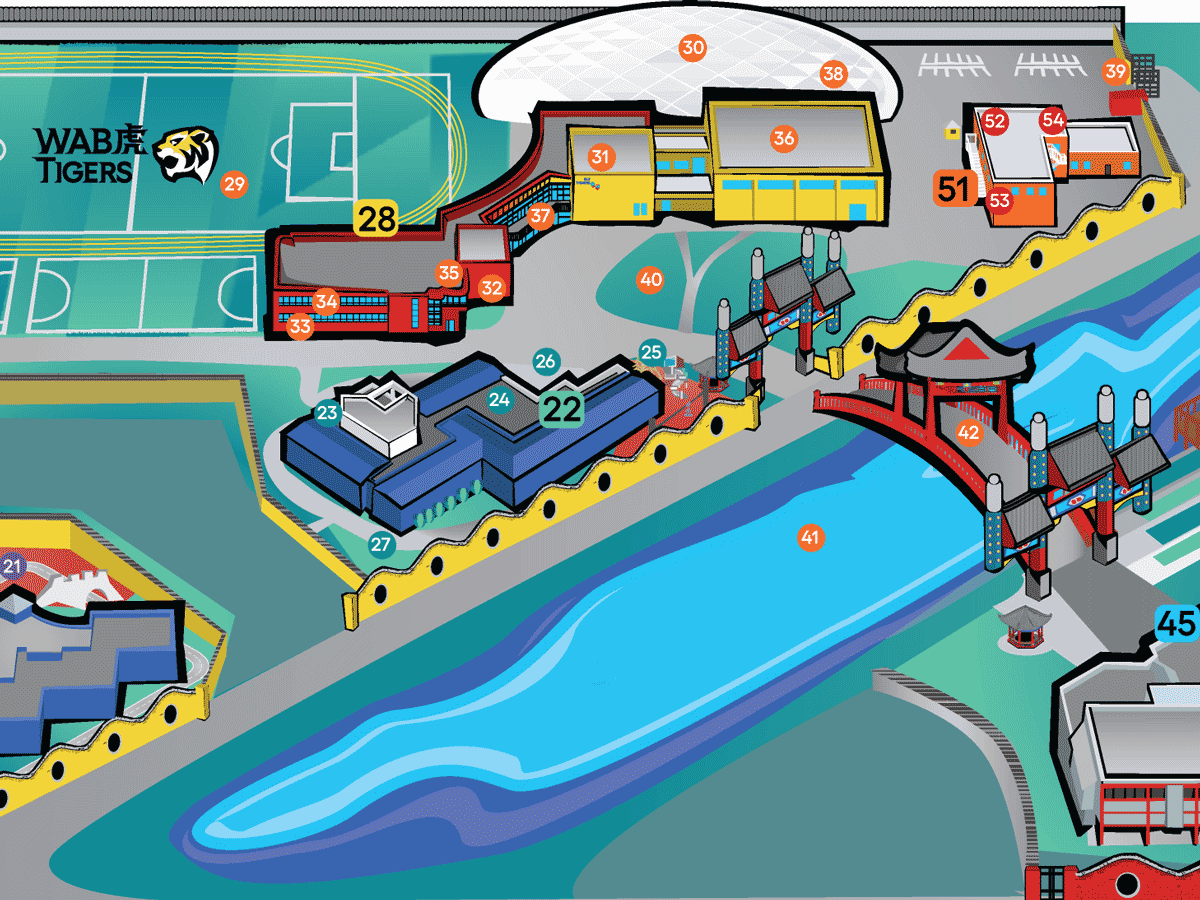
WAB Brand Rollout: First Steps
WAB Brand Rollout: First Steps

Como Friends Insider Newsletter
Como Friends Insider Newsletter

Unified Event System, Como Friends
Unified Event System, Como Friends
III. Reflection
Launching a new brand is ultimately an exercise in change management. Even the strongest strategy can create anxiety. For some, the change feels too bold. For others, not bold enough.
The discipline is to involve people early without diluting the strategy itself. Not every preference can shape the outcome, but every perspective can be heard. When the reasoning is transparent and the “why” is grounded in sound strategy, resistance softens over time.
Sustained alignment rarely happens on day one. It is built through clarity, consistency, and patience.