
Designing a month-long fundraising narrative leading to Give to the Max Day
I. Background & Challenge
Como Friends is the nonprofit partner of Como Park Zoo and Conservatory, responsible for fundraising and donor engagement. In advance of Minnesota’s annual Give to the Max Day, the organization needed more than a one-day donation push.
The challenge was to build momentum over time, reach families and first-time donors without fatigue, and create a campaign that felt inviting rather than transactional. Tone mattered. Trust mattered. The question was how to design a campaign that could hold attention, tell a clear story, and lead naturally to giving.
A Multi-Channel Campaign: HTML Email, Print Newsletter, Fliers, Social Media.
On Give to the Max Day, the campaign raised $48,700 (2014 dollars).
II. Strategy & Expression
The campaign was designed as a month-long narrative rather than a single moment.
Content rolled out across multiple channels, including email, social media, and digital graphics, each reinforcing the same story while offering different ways to engage. Baby announcements, naming contests, and illustrated explanations of how each gift supported the animals and the zoo helped build familiarity and momentum over time. The goal was recognition and continuity, not volume.
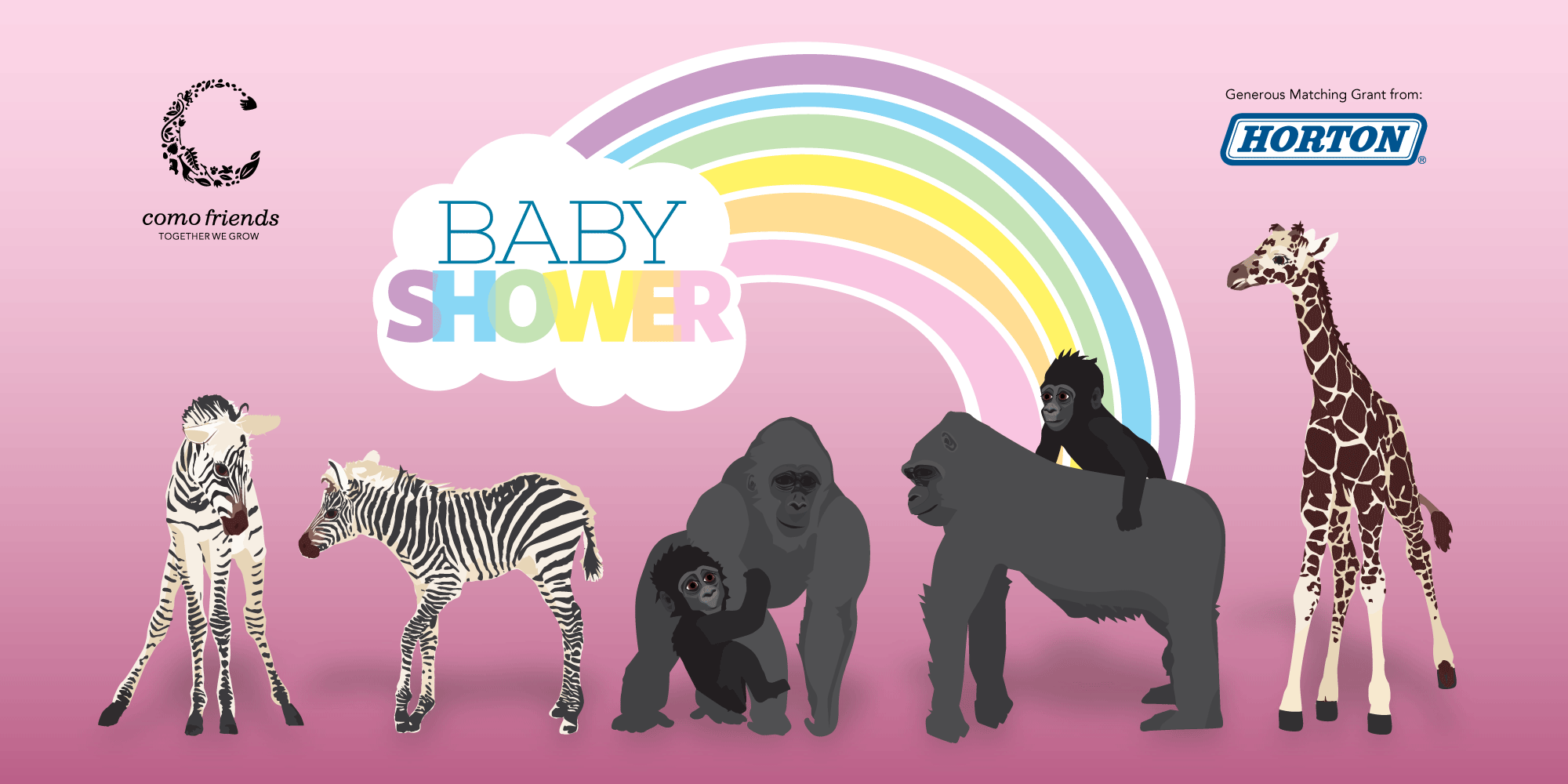
Visually, the campaign used animal illustrations inspired by children’s media familiar to Como’s audience. Paired with graphic treatments drawn from celebratory formats such as invitations and announcements, the system was intentionally approachable and easy to recognize as it unfolded.
On Give to the Max Day, the campaign raised $48,700.
III. Reflection
Even though it was over 10 years ago, this project remains important to me because it tested more than campaign performance. It tested how values show up under pressure.
Shortly after the campaign concluded, a baby gorilla was born and died five days later. Leadership had long been cautious about early announcements, aware of the emotional risk involved. During planning, I had advocated for transparency if a loss occurred, using the moment to educate rather than retreat.
The resulting communications acknowledged the loss while placing it in a broader conservation context, reinforcing trust through honesty and perspective.
This project reflects how I approach strategy today. Strong brand and communication systems are not just designed for success. They are designed to respond with clarity and care when the story becomes more complicated.